
Since late 2022, Mikel Konate has been developing this long-term visual journalism project, collaborating with fellow journalists, scientists, and fire experts at different stages of its development to examine the complex web of factors behind the emergence of extreme wildfires — catastrophic events reshaping landscapes, transforming ecosystems, and threatening communities worldwide.
Each fire season, he embeds with wildland firefighting crews on the front lines, providing first-hand documentation of their work while investigating the environmental, social, and political processes driving a new generation of fires.
Through careful documentation, sustained fieldwork, and investigative reporting, the project explores the confluence of factors — including widespread rural abandonment, changing land-use practices, overly restrictive administrative measures, the near disappearance of traditional fire use, and the absence of coherent long-term policy frameworks — that have contributed to unprecedented fire dynamics.
Once an essential tool for land management and ecosystem maintenance, fire has been progressively excluded from the landscape, disrupting natural cycles, enabling excessive fuel accumulation, and contributing to fires that increasingly exceed conventional suppression capabilities.
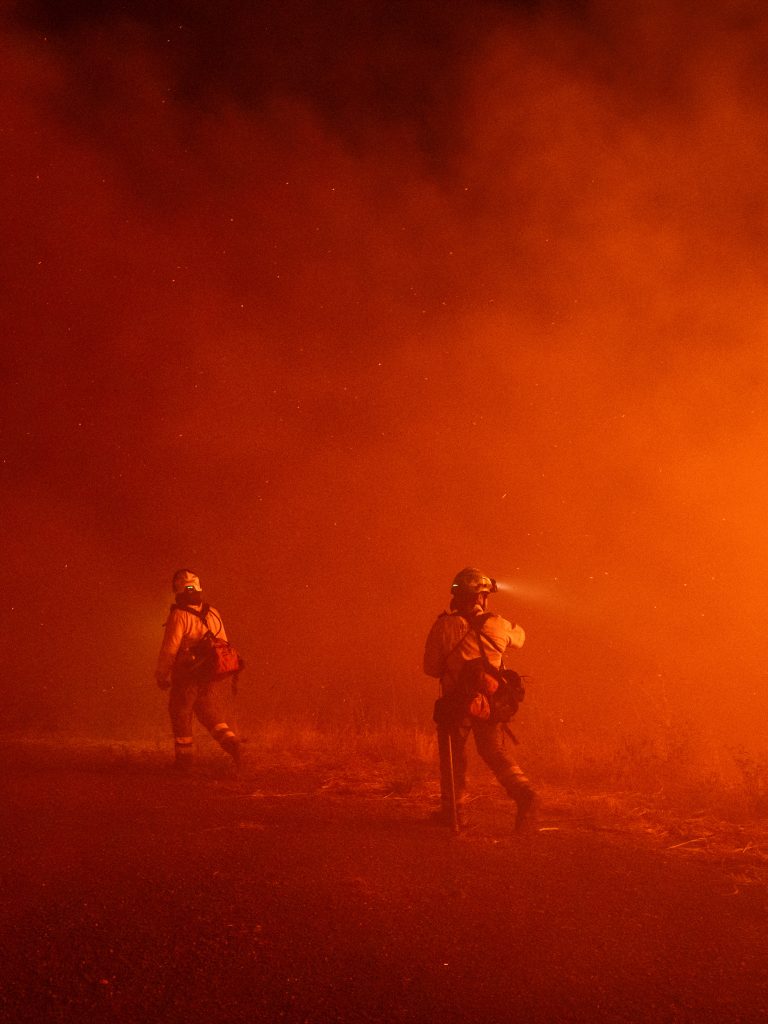

Combining long-form journalism, documentary filmmaking, photography, and in-depth interviews with leading scientists, firefighters, forest managers, and rural communities, the project brings together visual journalism and scientific knowledge to explain how these interconnected factors, with climate change acting as a powerful catalyst, are reshaping fire regimes.
Beyond documenting the causes and consequences of extreme wildfires, it explores their psychological impact on affected communities, examines emerging pathways towards adaptation and coexistence with fire, and contributes to a deeper public understanding of one of the defining environmental challenges of our time.
Content


